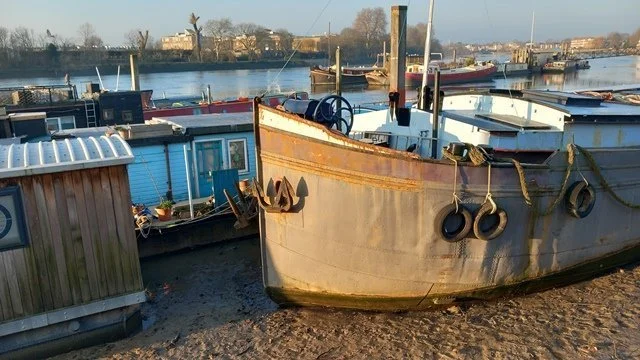
Hope Pier, with Dove Pier behind. Early morning 2023.
GUIDED RIVERSIDE WALK
This walk takes you in the upstream direction along Hammersmith’s Lower and Upper Malls. It starts at the Riverside Studios. You pass through Furnivall Gardens and end up half and hour later at the Elder Press Cafe. Both are recommended for their coffee and buns. En route you pass (or drop into) four pubs: The Blue Anchor, the Rutland Arms, The Dove, and the Old Ship.
The walk is shown in Google streetview here.
RIVERSIDE STUDIOS
Riverside Studios started life as an iron foundry. It was converted to a film studio in 1933, and was bought by the BBC as in 1954. When the BBC moved out in 1974 it was taken over by an arts centre charity. The site was re-developed in 2014, but the charity failed financially in 2024. In 2025 the building was bought, to continue as an arts centre, by the charitable foundation of Anil Agarwal, an Indian metals billionaire.
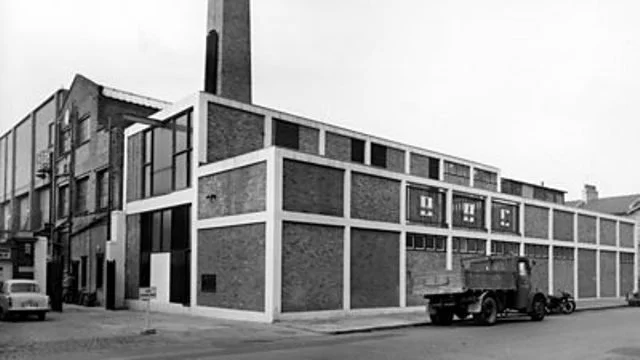
The old Riverside Studios. Previously an iron works and a film studio.
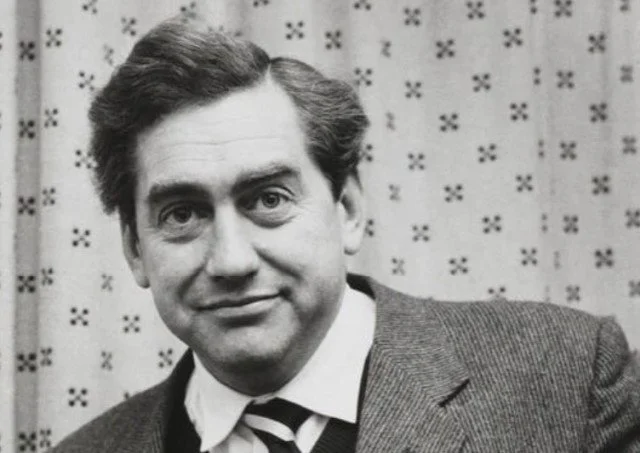
Tony Hancock, star of Hancock’s Half Hour.

The foyer of the new Riverside Studios, built in 2014.
-
The old Riverside Studios started life as an iron foundry and had been converted into a film studio in 1933. The site, with its two large studio spaces was purchased by the BBC in 1954 from the Alliance Film Company. Amongst the first programmes made there was Hancock's Half Hour, as the show demanded a studio audience which Riverside could accommodate. Watch the famous Blood Donor episode here.
During the 1950s and 60s it was the recording location for some notable programmes, including the science-fiction classic Quatermass and the Pit, early episodes of Doctor Who (including First Doctor's regeneration from William Hartnell to Patrick Troughton), and children's favourite Play School. The BBC moved out in 1975, and a charitable trust formed by Hammersmith and Fulham Council took over.
Following the BBC’s departure in 1974, the building became an arts centre in 1976, launching with a vibrant community festival. Under the artistic directorship of playwright and director Peter Gill, Riverside Studios put on landmark productions of The Cherry Orchard with Judy Parfitt and The Changeling with Brian Cox (both 1978).
A mixed programme of international theatre, dance, visual art, television, comedy and music was established early on and has succeeded in bringing the world to west London. The variety of collaborators over the years – including Amy Winehouse, Benjamin Zephaniah, Yoko Ono, Samuel Beckett, Michael Clark, David Hockney, Lenny Henry, Graeae, David Bowie and Black Theatre Cooperative – reflects Riverside’s purpose as an intersection for the arts.
The original Riverside Studios closed for redevelopment in 2014 and the new Riverside Studios building opened on the same site in 2019. It includes two TV recording studios,a cinema, a theatre, a cafe, a restaurant, and relaxed workspace shown in the image above. The cafe has wonderful views across the Thames through its full height glass walls.
In 2024 the Riverside Studos ran into financial difficulty and entered administration. In 2025 the building was bought, as an arts centre, by the charitable foundation of Anil Agarwal, an Indian metals billionaire.
Description text goes here
STATUE OF CAPABILITY BROWN
Before setting off upstream, you might like to go just past the Riverside Studios, along the Thames Path, to see the statue of Capability Brown by Laury Dizengremel. He is shown in a deliberately dynamic pose.
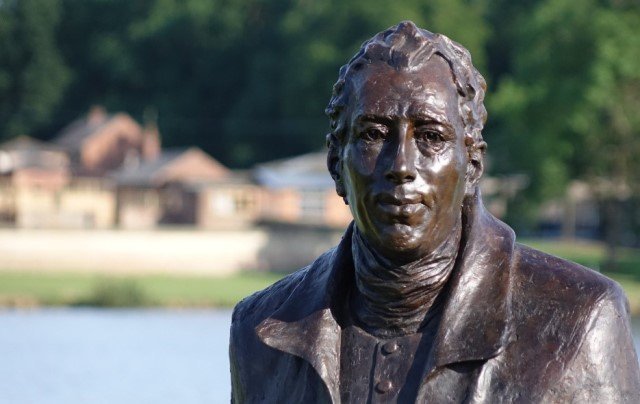
The 2017 statue of Capability Brown, by Laury Dizengremel.

The grounds of Chatsworth; one of Capability Brown’s projects.
-
The statue was unveiled in 2017, following the bicentenary of his birth in 2016, and was made possible by a fund raising campaign led by the Hammersmith Society. Brown lived for 13 years in nearby Chancellors Road, and it was during this time that he designed his greatest landscapes - surrounding great houses with idealised rolling English countryside. These included Blenheim, Petworth, Burghley, Alnwick and Chatsworth (shown above).Description text goes here
BECKETT WHARF PARK
Just upstream of the Riverside Studios you pass on your left Beckett Wharf Park - one of the smallest parks in London. It is a tiny space, with three benches and two lamp posts - raised up to provide a wonderful view over the Thames. It was the subject of a restoration project in 2024 which included the re-painting of its railings, the refurbishment of the benches, and the installation of an engraved granite slab carrying the first verse of John Masefield’s poem Sea Fever. The slab acts as a crude sundial, as the shadow of the adjacent lamp post falls across it at noon. The restoration project was generously funded by Kier Construction, who were undertaking a major development downstream of the Riverside Studios.
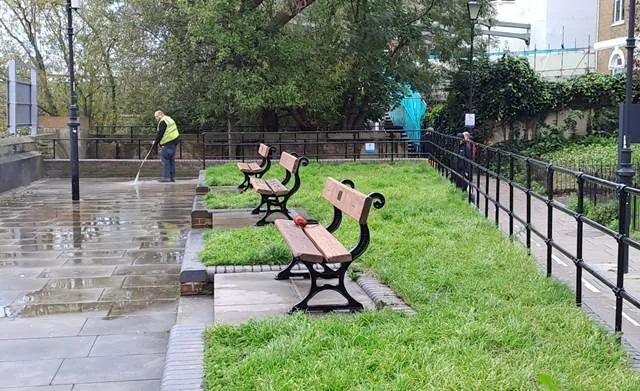
Beckett Wharf Park after restoration.
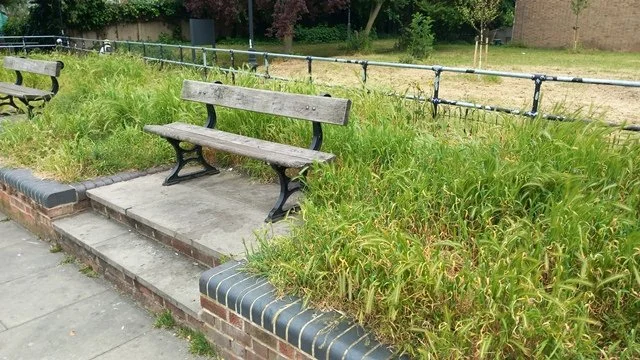
Beckett Wharf Park before restoration.

The team from Kier Construction laying the granite slab with the first verse of John Masefield’s Sea Fever.
HAMMERSMITH BRIDGE
After Beckett Wharf Park you squeeze under Hammersmith Bridge. The bridge is closed to motor traffic while it undergoes major repair work. A very early type of suspension bridge, it was designed by the great Victorian engineer Joseph Bazalgette. It was built on the foundations of the first Hammersmith Bridge which was designed by William Tierney Clark and opened in 1827. The preset bridge, designed by Joseph Bazalgette, was opened in 1887.
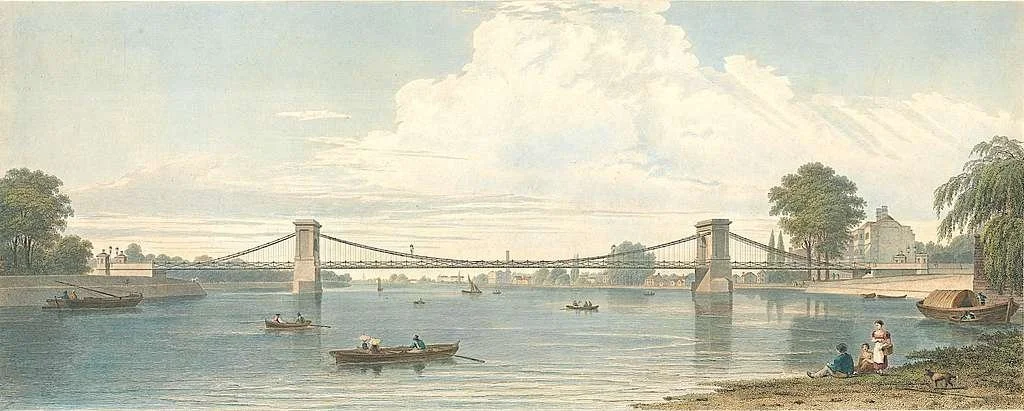
The first Hammersmith Bridge, opened in 1827.
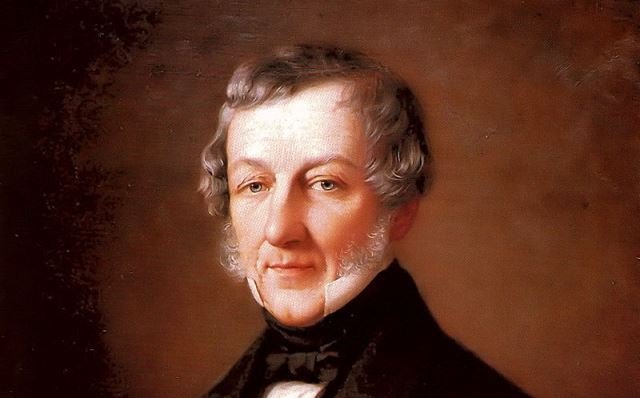
William Tierney Clark, designer of the first Hsmmersmith Bridge.
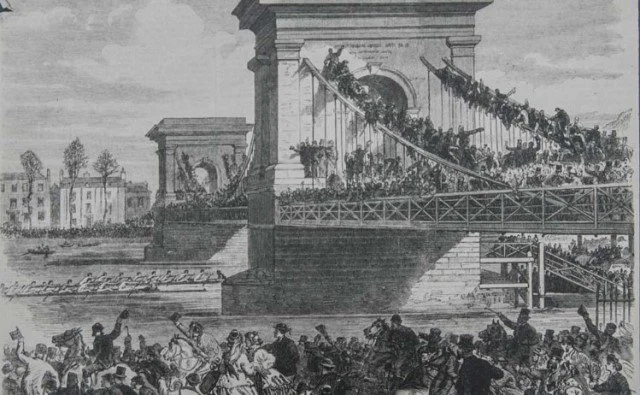
11,000 spectators of the Oxford & Cambridge boat race crowd the first bridge in 1870.
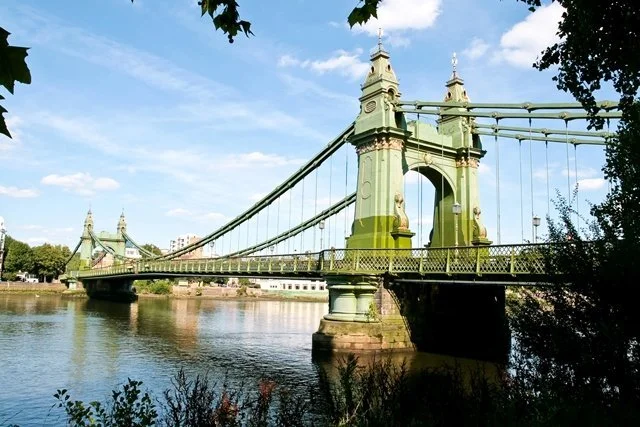
The present Hammersmith Bridge, built on the foundations of the first bridge.

Sir Joseph Bazalgette, designer of the present Hammersmith Bridge.
-
In the early 1820s s group of local people proposed a new bridge at Hammersmith rather than detouring to either Kew Bridge or Putney Bridge to cross the river. The construction of the bridge was first sanctioned by an Act of Parliament on 9 June 1824. Work began on site the following year, and the bridge (shown above) was opened on 6 October 1827. Construction of the bridge cost some £80,000 (equivalent to £7.5 million in 2021). It was the first suspension bridge over the River Thames and was designed by William Tierney Clark. Clark, a Fellow of the Institution of Civil Engineers, was one of the first designers of suspension bridges. He lived locally, and is buried in St. Peter’s Church, Hammersmith.
Clark’s bridge was held in great affection despite its unsuitability for the increasingly large volume of traffic using it. The low clearance level at high tide was lampooned in an 1842 edition of Punch: ‘A vessel passing under it is compelled to lower her chimney onto the heads, or into the laps, of the passengers, besides rendering it incumbent on all on board to bend to circumstances, by placing their heads between their knees, during the time occupied in passing under the elegant and commodious structure.’
In 1870 the bridge was barely able to sustain the pressure created by the presence of over 11,000 enthusiastic spectators who came to Hammersmith to watch the annual University Boat Race. The resulting safety concerns were one factor leading to the construction of a new bridge.
The present Hammersmith Bridge was designed by Sir Joseph Bazalgette and rests on the same pier foundations constructed for Tierney Clark's original structure. The new bridge was built by Dixon, Appleby & Thorne and was opened by the Prince of Wales on 11 June 1887. With much of the supporting structure built of wrought iron, it is 700 feet (210 m) long and 43 feet (13 m) wide and cost £82,117 to build (equivalent to £9.7 million in 2021). It is an extremely rare example of an eyebar suspension bridge. While there are other examples of eyebar suspension bridges both in Great Britain and elsewhere in the world, on a global scale they are among the rarest types of bridges. Eyebar suspension bridges tend to be the oldest types of extant suspension bridges. They fell in popularity for bridge construction in favor of stronger wire cable suspension bridges. Eyebar suspension bridges are sometimes called "chain bridges".
Early in his career, Sir Joseph Bazalgette set up a private consultancy in 1842 with an office in Great George Street, Westminster. As a consulting engineer, he worked on the Tame Valley Canal in Birmingham, at Portsmouth Dockyard, and was heavily involved in surveys for railways. In 1852, he was appointed engineer at the Metropolitan Commission, until it was replaced by the Metropolitan Board of Works (MBW). Joseph was elected engineer to the Board on 25 January 1856 on a salary of £1,000 a year. He stayed in the role until the MBW was replaced by the London County Council in 1889.
The first work of the MBW was to finish the design and implement the plans for the main drainage of London. The whole system consisted of 1,300 miles of sewers and 82 miles of west-east intercepting sewers. It also included Abbey Mills pumping station at Stratford, Western pumping station at Pimlico, Deptford Pumping Station, Crossness Pumping Station, and the Southern Outfall Sewer. As part of the drainage system, Sir Joseph embanked the River Thames in central London, which he said reclaimed about 52 acres of land. The embankments tidied the mud banks on the river’s edge, improved road traffic flow, and created additional building land. These comprised the Victoria Embankment (opened 1879), which runs between Westminster and Blackfriars Bridges, the Albert Embankment (opened 1868) on the south bank between Westminster and Vauxhall Bridges, and the Chelsea Embankment (completed 1874).
BRITISH ROWING
After crossing under Hammersmith Bridge you pass on your right, at 6 Lower Mall, the Grade II listed offices of British Rowing, formerly the Amateur Rowing Association, shown above. British Rowing is the governing body for the sport of rowing (both indoor rowing and rowing on water). It works to ensure the sport continues to thrive from the grassroots right up to winning medals at the Olympic and Paralympic Games.

7-12 LOWER MALL
The British Rowing building adjoins an exceptional group of 18th century houses from 7 to 12 Lower Mall. Beach House, the white house in the centre above, was originally a boat house directly on the river’s edge before the tow path was built. The boat house became part of the basement of the present building This was built around 1760; externally it has changed very little since then.

KENT HOUSE: A WORKING MEN’S CLUB
Next on your right is Kent House (below) which was for 150 years a working men’s club and is now a luxury residence with a glass walled indoor swimming pool. The Hammersmith Club (successor to the working men’s club) occupies an events space (below) and a billiard room and bar at the rear. Built in 1762, Kent House is Grade II listed.

Kent House.

The Hammersmith Club.
-
Credit for saving the working men’s club from demolition goes to Alan Brodrick, as described in this extract from a 2010 article at the My London website.
‘In 2003 the Hammersmith Working Men's Club, a Rutland Grove institution for 150 years, was on the brink of being consigned to history. Like other venues of its ilk, it's membership, once 2,500-strong, had dwindled and, with its interior crumbling, a lack of funds and seemingly little appetite to save it, developers, sensing their chance to make a killing at one of the borough's prime locations, were looming large.
That it continues is in large part down to Hammersmith-born and bred Alan Brodrick, a club member since the 1960s, who formed a committee to fight off the developers and then gave up his retirement to get the iconic venue back on an even keel. When developers then made an offer to buy the complex, which included Kent House, the building behind the main hall which housed the club's stewards, and turn it into flats, its future looked doomed. But Alan decided to act. He formed a committee, became president and, with the help of the council, fought tooth and nail to save it. After the planning application to bulldoze the main hall was eventually rejected, Alan and the committee struck a deal to sell Kent House in exchange for funds to refurbish the club. Six-hundred thousand pounds was spent on a refurb, and then he set about rebranding, changing the name to the Hammersmith Club, setting up a website and moving away from the traditional working men's club model. The building is now split in two, with one half being hired out to non-members for weddings, comedy clubs and music events, but with the other reataining its traditional guise and still housing the members.’
TWO PUBS AND A CLUB
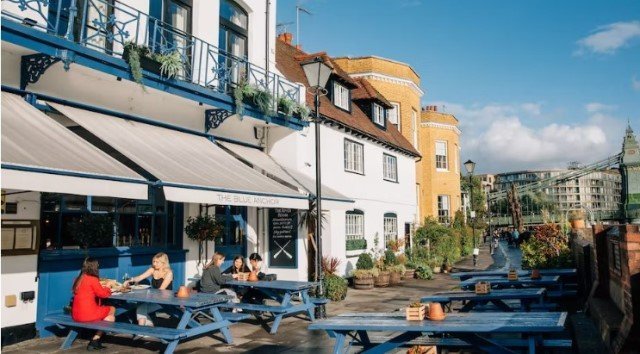
Next on your right is a group of two pubs and a club. The pubs are the Blue Anchor (above) which was first licensed in 1722, and the Rutland Arms (below).
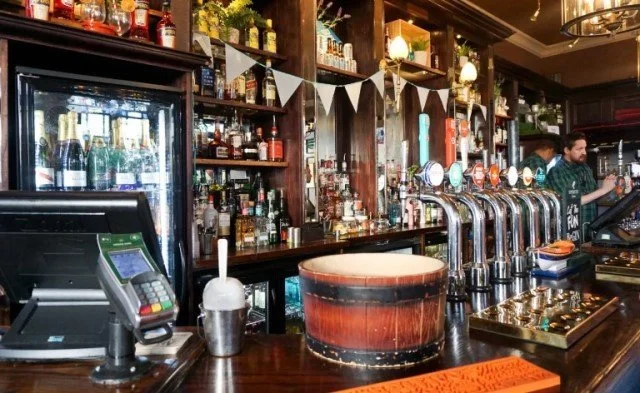
Squeezed between these two pubs is the Auriol Kensington Rowing Club. Auriol Kensington was formed in 1981 by the merger of two much older clubs, Kensington RC and Auriol RC. Kensington was one of the early amateur rowing clubs, founded in 1872. It adopted the genteel name of ‘Kensington’ as many of its founder members were connected with the large stores from there and from the West End of London. Auriol was founded in 1896 by the Reverend Propert (who lived in Auriol Road, Hammersmith) with the aim of promoting ‘muscular Christianity’ among working men.
-
In their early years, neither club owned boats nor property. There were many clubs based in Hammersmith and other places that simply hired boats from local boatyards and rented rooms to change in from nearby pubs. Kensington rented a room in the Blue Anchor at 13 Lower Mall and Auriol had the same arrangement with the Rutland at 15 Lower Mall. Their boats came from the Biffen Boathouses at 14 and 16 Lower Mall. The Club’s Men’s Squad is gathered below.

Members of the Auriol Kensington Rowing Club.
WHERE W. BIFFEN & SONS WAS
As you pass the end of Mall Road, you can imagine the now disappeared boatyard of W. Biffen & Sons, inventors of the Patent Portable Boat. As the advert above shows, they offered a wide range of four-oared, pair-oared, sculling, and pleasure boats for sale or hire. They proudly report the success of their racing boats as far afield as Melbourne and China.

FURNIVALL SCULLING CLUB
Next up on your right is the Furnivall Sculling Club. In April 1896, the 71-year-old Dr. Furnivall founded the Hammersmith Sculling Club for girls, later becoming Furnivall Sculling Club. Having learnt to row in his teens, rowing became a lifelong obsession for Dr. Furnivall.
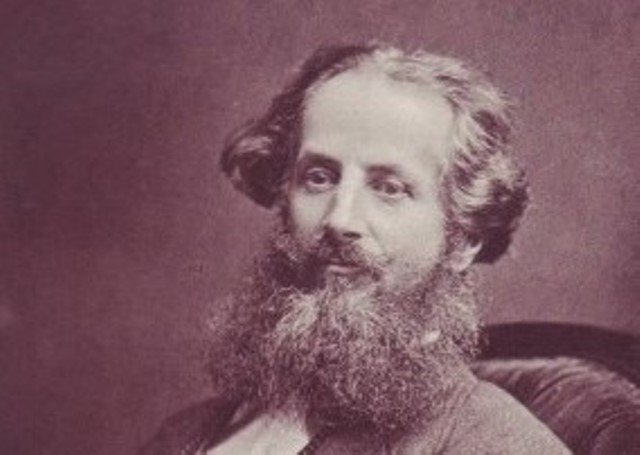
The redoubtable Dr Funrivall.
-
Furnivall was admitted to Trinity Hall Cambridge in 1842, where he rowed in the first eight. He also sculled regularly and at the age of 20, he and his friend John Beesley built the first narrow, outrigged single scull to be seen on the Cam. In 1891 when the Amateur Rowing Association refused to accept working men as ‘amateurs’, Furnivall founded the National Amateur Rowing Association which anyone could join. Given his passionate opposition to discrimination, he wanted to break into the traditionally male-dominated world of river sport, by building a club for women. Membership of the Hammersmith Sculling Club was extended to men in 1901. It was also in this year that the name was changed to Furnivall Sculling Club for Girls and Men. The captaincy continued to be restricted to female members for the first half of the century, however, in honour of Dr. Furnivall's original purpose for founding the club.
Dr. Furnivall continued to row regularly every Sunday, to Richmond and back, a habit he maintained throughout his life until he died in 1910 aged 85. Dr. Furnivall was a true Victorian. Not only did he found the club when he was a young 71 but he was also the ultimate enthuiast; passionate about social justice and personal health. He never smoked or drank and, unusually for the time, became a vegetarian. In 1849 he opened a school for poor men and boys and in 1851 he sold his book collection so as to give £100 to support striking woodcutters. The following year he helped establish the Working Men’s Association. But it was his literary work that attracted national attention. In 1861 he started work on a dictionary which finally saw the light of day as The Oxford English Dictionary. That task was taken out of his hands as he was diverted by new pursuits. He founded the Early English Texts Society in 1864, the Chaucer Society in 1886, the Ballad Society and also the New Shakespeare Society in 1873, the Wicliff Society in 1881, and in 1886 the Browning Society and the Shelly Society. In his spare time he became the leading expert of the day on Chaucer. The redoubtable and progressive Dr Furnivall is shown above.
WESTCOTT LODGE
Next on the right is Westcott Lodge, above. Built in 1746, it was originally the vicarage of St. Paul’s Church at Hammersmith Broadway. being severed from the church when the A4 trunk road was created. it was the first home of the Hammersmith Chess Club, which met there until 1970, when it had grown too large, and moved to St Paul's Church Hall. The first president was the eccentric Lady Herbert, wife of A. P. Herbert. 1968 saw the British champion, Dr. Jonathan Penrose (below) play a simultaneous display at the club, winning 17 games and drawing two. Westcott Lodge is now a private house.
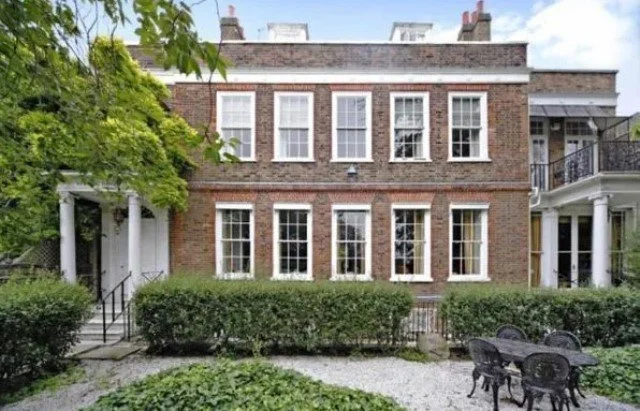
Westcott Lodge.
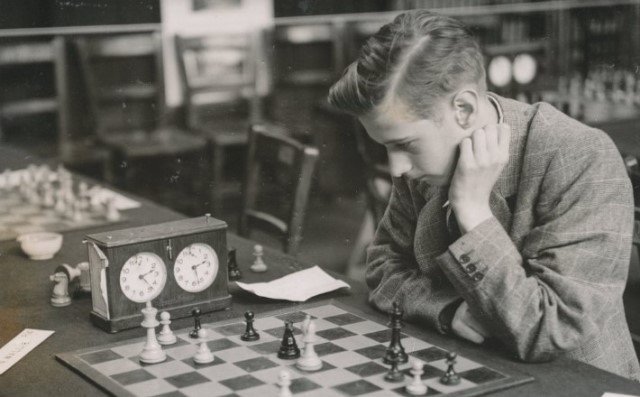
Jonathan Penrose.
FURNIVALL GARDENS
Then on the right we come to Furnivall Gardens, a park named after Dr. Furnivall, founder of the Furnivall Sculling Club. It was once the location of the mouth of Hammersmith Creek, which had an active fishing trade until about 200 years ago. The creek, shown in the image below, was filled in during 1936.

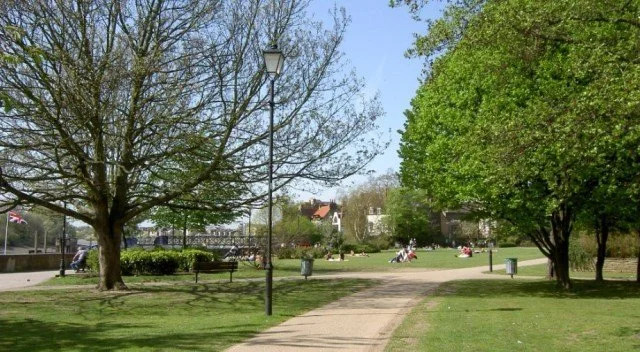
Furnivall Gardens today.

Aerial view of Furnivall Gardens.
-
In 1948, it was decided that there should be a public open space on bomb-damaged land between the river and the Great West Road, to coincide with the 1951 Festival of Britain. The new riverside park was named after Dr. Furnivall. A park was created on what had been the Hammersmith Friends Meeting House burial ground, destroyed by a flying bomb in the war.
In 1963, a street lamp that had formerly been in West Berlin was given by Willy Brandt, then Mayor of West Berlin, to mark Hammersmith's twinning with the Berlin (previously West Berlin) district of Neukölln. It now stands on the wall of Westcott Lodge, facing the gardens. Below it is a plaque which reads: "The lamp above this plaque was formerly used to light a street in West Berlin. It was presented by Herr Willi Brandt, Mayor of West Berlin to Councillor Stanley Atkins, L. P., The Worshipful the Mayor of Hammersmith, as a token of friendship between the two communities on the occasion of the Jumelage held in this Borough, 1st June 1963."
HOPE PIER
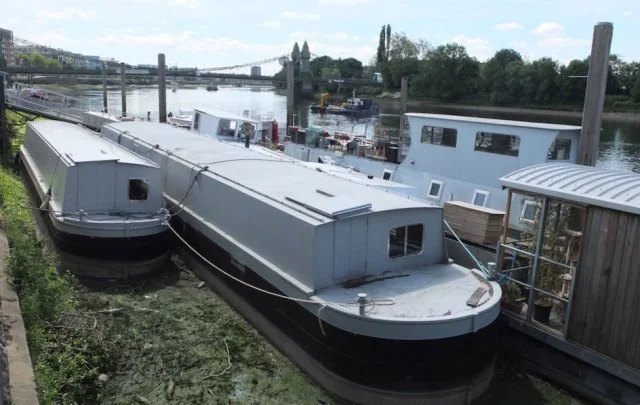
On your left, opposite Westcott Lodge, is Hope Pier. An amiable jumble of houseboats of different sizes and shapes, Hope Pier has a somewhat bohemian character. Being adjacent to the river wall, it is tidal, and at low tide the houseboats rest on mud.
-
The following information about Hope pier is extracted, with acknowledgement and thanks, from the website of the Thames Festival Trust:
Situated on the riverside at Hammersmith, on a site previously marked as ‘Hope’s Wharf ’, various Ordnance Survey maps show a landing stage where Hope Pier currently sits, which backed onto Hope Wharf.
An advert for the sale of Hope Wharf in Public Ledger and Daily Advertiser from December 1826 advertises the site as “well adapted for barge-builders, timber-merchants, or a wharf of any description”. It is also described as including “two well-built sheds, with convenient launching pads… two sawpits, shed, large yard, and counting-house, a comfortable dwelling containing four good bedrooms, parlour, washhouse, roomy cellaring…with small garden at the back, walled in.” Another article from 1932 refers to a pesticide company, Seedolin Co. Ltd. occupying the site at Hope Wharf. It is unclear at which point Hope Wharf ceased operating as an industrial wharf. The moorings at Hope Pier have reportedly been in the See family for five generations. It is believed that Charlie See established the Hammersmith moorings in the early 20th century, he obtained permission from the vicar of St Paul’s living at Westcott Lodge. Charlie was a local waterman, who hired out skiffs and punts, as did other watermen along that stretch of the river. The moorings passed to his son Walter and grandson Alan, both of whom were licensed watermen. When Alan died in 2005, the moorings passed to his son Gary, who is the present owner. Gary See is listed in 192 Directory as a boat builder. In June 1981, Clive Wren – an architect still living at Hope Pier on his narrowboat Dubhe – first moved on to the Hammersmith moorings now known as Hope Pier. Dubhe was the first full-time residential boat and the first narrow boat on the moorings. At that point, the mooring was occupied by various river cruisers, which were taken out over weekends or in the evenings.
Clive had previously lived on the Thames in Kingston for a time when he was a student. He was drawn back to the river by the way of life. However, financial considerations were also leading people to afloat at that time. In the mid-1980s council housing was increasingly difficult to come by, encouraging people to look at alternative housing options. Consequently, during this time the number of residential boats at Hope Pier increased. In 1983 another residential boat arrived at the pier and over the next few years there were many more boats. Although Dubhe was the first narrow boat on the moorings, many more followed as well as Dutch sailing and motor barges and purpose-built houseboats. Over time, as more people have arrived the size of Hope Pier has increased, with additional pontoons and berths introduced. Gradually the mooring has been extended and pieced together. In the early 1980s the riverside at Hammersmith was not massively popular and the pubs and gardens enjoyed few visitors. In 1986, the local council lowered the river wall at Hammersmith because flood risk was reduced when the Thames Barrier came into operation in 1985. As a result the people of Hammersmith rediscovered the river and started to frequent the nearby park and riverside pubs once again and thereby opening people’s eyes to the prospect of living on the river. An article dated 1988, which pictured The Riverside at Hammersmith, states "there is little investment to maintain moorings". In 1990, following an incident in which the moorings were almost dislodged by a tree trunk floating down the river, a planning application was made to install piles to secure the pier. This was approved on appeal in 1991. As can be seen in an article by the Illustrated London News, this area of the river has long been a tidal magnet for driftwood. The Thames Reach article 1988, sites a planned meeting for the autumn of that year "possibly in the London borough of Hounslow" to include the London River Authority, Residential Boat Owners Association, local authorities, water authorities, boat owners and landlords "to lay the foundations for a much needed set of national guidelines for residential moorings". Items on the agenda were security of tenure, health and safety agreements, licences and amenities.
In a 2006 article in the Daily Mail, Gary See feared the licence fee charged by the PLA, which was £5000, could be raised to £38,000, "which he says will force him to double what he charges his tenants". The article states "boat owners already pay up to £5000 a year to moor at the site" Clive Wren, who is moored on a narrowboat at the pier said, "it's extortionate." There are currently twenty-eight residential boats at Hope Pier. A group of residents have just succeeded in buying the moorings from Gary See. They will run the pier themselves as Hope Pier Ltd. and take over the River Works Licence from the PLA. This is a move that will provide greater security of tenure for the residents of the mooring.
Note: Subsequent to this article the residents of Hope Pier did buy it from Gary See, and now and operate it collectively.
DOVE PIER
In contrast to Hope Pier, Dove Pier is extremely shipshape. And because it is set away from the river wall (being reached by a long gangway) its houseboats never rest on mud. Now privately owned by botanical artist Diana Everett, it has an interesting history. It was built in 1951 to enable visitors to take a river route to the Festival of Britain exhibition at the South Bank.
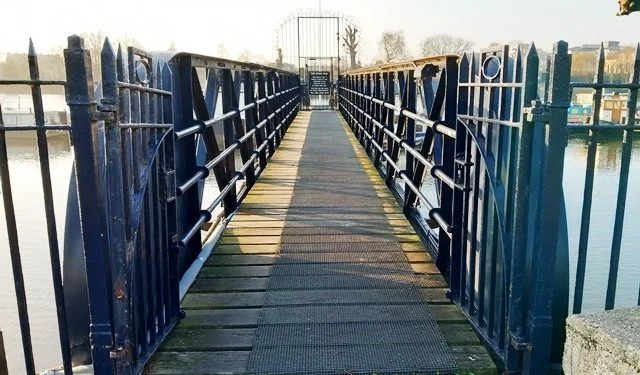
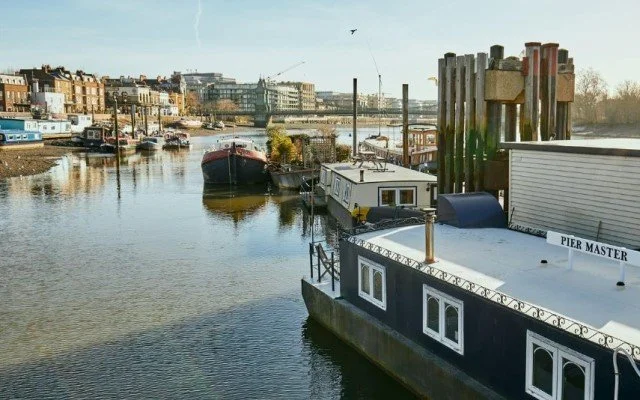
Located at the southwestern corner of Furnival Gardens in Hammersmith, Dover Pier hosts eight residential boats, as well as a floating garden and pier house. It was constructed by the Port of London Authority and opened on 5 May 1951. According to The Mall Conservation Area Character Profile 1997, "the pier was constructed for river steamers…by Hammersmith Council in 1951 to celebrate the Festival of Britain" (below) and allow residents of west London to visit the festival's attractions at Battersea Park and the South Bank. These steamers were passenger boats, for which the pier would have acted as a stopping point. The pier consisted of a bridge connecting the gardens to a single pontoon with a ticket office on it. The ticket office still exists today and operates as the pier house.
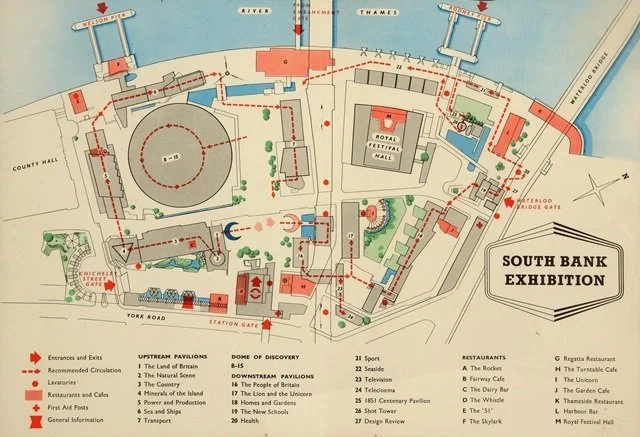
Festival of Britain. Shows the circular Dome of Discovery, and the Royal Festival Hall.
-
The following information about Dove PIer is extracted, with acknowledgement and thanks, from the website of the Thames Festival Trust:
Located at the southwestern corner of Furnival Gardens in Hammersmith, Dover Pier hosts eight residential boats, as well as a floating garden and pier house.
Furnival Gardens, which lies just upstream from Hammersmith Bridge, is on a site that was once the mouth of Hammersmith Creek, which had a thriving fishing industry until the early nineteenth century, and was navigable almost to King Street. The area had high quality housing in 1830 but by 1850 infilling had started and it became a dense mixture of factories, housing and other uses. In the 1920s Hammersmith Council began development of the area as part of its Hammersmith Southern Improvement Scheme and the Creek was infilled in 1936.
Existing and new housing suffered damage during the Second World War, and in 1948 the decision was taken to create a public open space on bomb-damaged land between the river and Great West Road, to be completed for the Festival of Britain. The public park was laid out in 1951 and was named after Dr Frederick James Furnivall (1825-1910), scholar and founder in 1896 of what is now the Furnivall Sculling Club, originally called Hammersmith Sculling Club for Girls and Men.
A pier was constructed by the Port of London Authority in the south-west corner of Furnivall Gardens, which opened on 5 May 1951. According to The Mall Conservation Area Character Profile 1997, "the pier was constructed for river steamers…by Hammersmith Council in 1951 to celebrate the Festival of Britain" (below) and allow residents of west London to visit the festival's attractions at Battersea Park and the South Bank. These steamers were passenger boats, for which the pier would have acted as a stopping point. The pier consisted of a bridge connecting the gardens to a single pontoon with a ticket office on it. The ticket office still exists today and operates as the pier house.
The pier is thought to have gone out of use after the Festival of Britain and to have ceased to generate an income. This seems to have been a general trend along parts of the Thames according to an article from 1970, which described the further decline in the use of the river: "for most Londoners and most planners it goes unnoticed". It went on to quote the River Thames Society: "between Chelsea and Richmond there are...a twentieth of the pleasure craft that the river could bear".
Eventually, the pier was sold by the Port of London Authority (PLA) to the owner of a nearby pub, The Dove. It is assumed that it was at this point that the pier came to be known as ‘Dove Pier’. It is unknown to what use the pier was put at this time. However, by 1988 despite being in a rather derelict state, there were eight residential boats moored at the pier. John Everett, who bought the pier in 1988 with his wife Diana, remembers that the pier had been extended in 1987, with the addition of two further pontoons to make it much longer in length.
The Mall Conservation Character Profile 1997, supports a more idyllic view of this part of the river saying "recreational and residential boats moored" in the area provide "interest and activity" and that "at present these are at the correct balance without overwhelming the river and blocking views of the river."
In 1999, there was a study commissioned by the Thames Strategy: Kew-Chelsea Steering Committee, a committee comprised of various official bodies. They earmarked Dove Pier for potential enhancement.
In a Guardian article from January 2005, about the possibility of using the Thames as a commuter route, John Everett, owner of Dove Pier said, "I have an aluminium boat that takes three people and we do the shopping by boat, but we have to pay enormous fees to the PLA to moor”.
The moorings are still privately owned and is now managed by Diana Everett. There continues to be eight residential boats at Dove Pier, just as when it was acquired. Although she denied there being a ‘type’ of person who likes to live afloat, Dove Pier has seemed to attract a number of creative an artistic people (Diana herself is a botanical artist).
Property advertisements boast that Dove Pier is a popular and expensive mooring, describing it as "arguably the most picturesque mooring in West London...enjoying uninterrupted views that encompass a wide swathe of the more rural River Thames". The advert goes on to say that Dove Pier is "at a pivotal point in the Cambridge & Oxford Boat Race; on the bend between Hammersmith and Chiswick", as well as being "enviably close to the transport links of Hammersmith".
Dove Pier is one of the few piers along the Thames to have what is called a "garden barge" a landscaped barge for exclusive use as a garden. Diana Everett owns this barge, which is moored next to her houseboat and spends much of her time tending to the garden. Along with the garden, Diana said that what she likes most about living afloat is “the light and the space and the sense of freedom. I’m in the middle of London, yet it feels a though I’ve got all the space in the world.”
Diana designed the interior of the boat herself along with a Marine Architect and made sure to be consulted at all stages of the build to get everything just right. Although she didn’t raise any of her children aboard she is visited regularly by her grandchild who “particularly think it’s wonderful and a bit weird. They love it.”
THE DOVE PUB
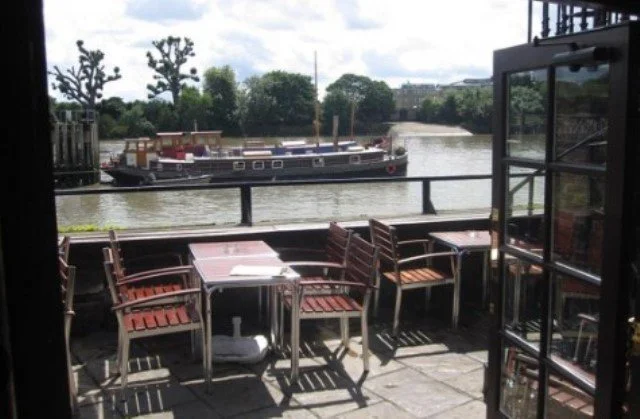
At the end of Furnivall Gardens you squeeze down a passage (protected with iron bollards) containing on your left the entrance to the Dove public house. It is a magical spot, with a terrace looking directly over the Thames.
-
The Dove describes itself on its website thus:
Sitting next to the fire, or out on The Dove's riverside terrace, you are not just sitting in any old local – you are a part of London’s rich history. A public house has stood on this site since the seventeenth century. Throughout these years our sturdy bar has propped up some of the finest figures of English history. The poet James Thomson composed the familiar strains of ‘Rule Britannia’ here. Charles II romanced and dined his mistress Nell Gwynne here. And in the famous novel ‘The Water Gypsies’, author A P Herbert features it under a cheeky pseudonym; ‘The Pigeons’.
Much of the history of The Dove lies shrouded in mystery, but sitting here it’s not hard to imagine the bawdy behaviour of Regency writers, or the delicate conversations of the pre-Raphaelites, all going on under this roof. In more recent years the pub has played host to some of the finest actors, writers and politicians in London. If you have a moment to spare in between beverages, have a look at the framed list of patrons that hangs over the lower bar’s fireplace. It reads like a Who’s Who guide of the last few decades.
It’s not just the clientele, but the building itself that has some amazing claims to fame. The small space to the right of the bar, reached through an extra entrance only the eagle-eyed will spot, went into the Guinness Book of World Records as the smallest bar room in the world. Step inside it and you’ll see the brass plaque that marks the height the waters reached in the great flood of 1928.
KELMSCOTT HOUSE
Just past the Dove pub, you pass on your right Kelmscott House (above) a Grade II* listed Georgian brick mansion at 26 Upper Mall. Built in about 1785, it was the London home of English textile designer, artist, writer and socialist William Morris from 1878 to 1896. It was preivously the home of Sir Francis Ronalds, arguably the first electrical engineer.
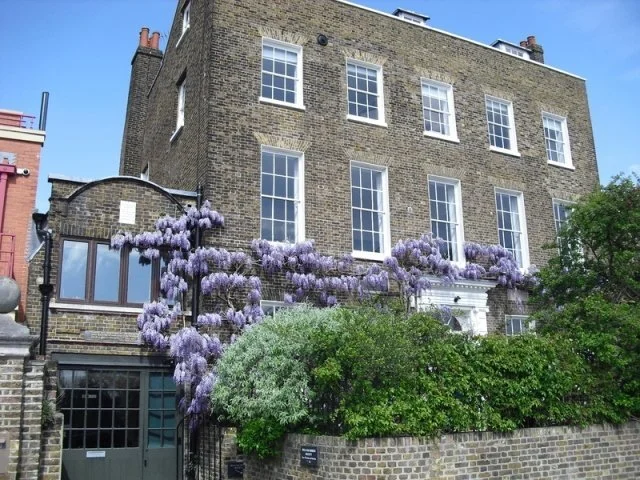

William Morris.
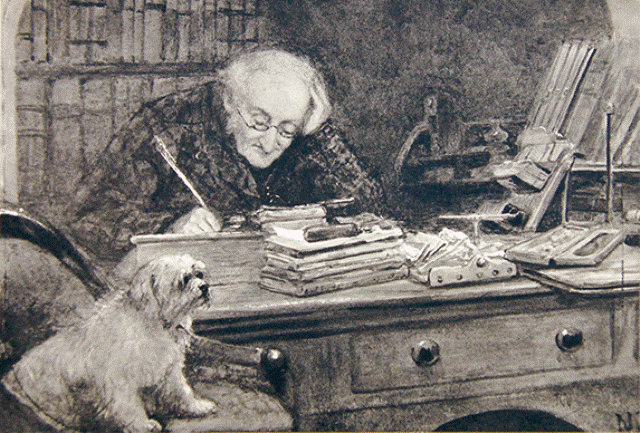
sir Francis Ronalds at work.
-
Originally called The Retreat, Morris renamed the house after the Oxfordshire village of Kelmscott, where he had lived at Kelmscott Manor from June 1871. Nearby, Morris began his "adventure in printing" with his private press, the Kelmscott Press, which he started at 16 Upper Mall in 1891.
The property was once owned by Sir Francis Ronalds' family. Sir Francis Ronalds FRS (1788 – 1873), shown at work above, was an English scientist and inventor, and arguably the first electrical engineer. He was knighted for creating the first working electric telegraph over a substantial distance. In 1816 he laid an eight-mile length of iron wire between wooden frames in his mother's garden and sent pulses using electrostatic generators. From 1867, then called The Retreat, it was the family home of poet, minister and novelist George MacDonald who wrote two of his most popular children's books, At the Back of the North Wind (1871) and The Princess and the Goblin (1873), there. The main part of Kelmscott House is now a private house.
WILLIAM MORRIS SOCIETY
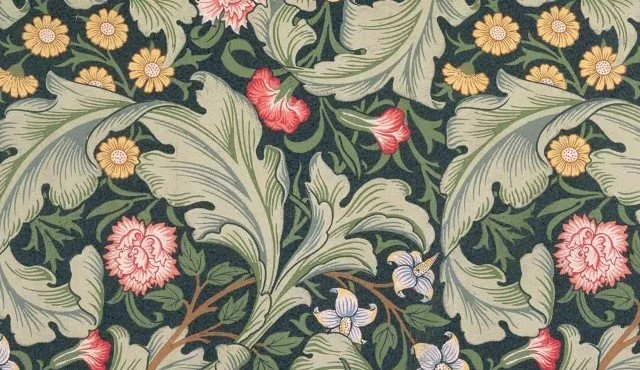
The basement and coach house of Kelmscott House serve as headquarters of the William Morris Society. Their premises, which include a small museum, are open to the public.
-
The Society describes itself on its website thus:
The coach house is now our seasonal exhibition space. We hold events and exhibitions of work by Morris and those inspired by him here but much has happened in this room; Morris started to weave his first carpets here, and when he became active in politics, the coach-house became the meeting place for the Hammersmith branch of the Socialist League.
Our basement rooms have an extensive Morrisian reference library, showcase changing displays from our collection as well as Morris’s original Albion printing press used in the production of the Kelmscott Press Chaucer, Morris’s last great creation. The majority of The William Morris Society’s collection originates from the generous legacy of Mrs Marion Helena Stephenson, who also bequeathed Kelmscott House to the Society as a fitting location to study and appreciate her artefacts.
The collection contains a number of Kelmscott Press titles and working proofs as well as the only printing press used by Morris left in the country. Dating from c.1835 it is fully operational and used on a regular basis by our artist in residence. The Society has a comprehensive collection of Morris and Company wallpapers, watercolour designs, and a selection of textiles, ranging from a Hammersmith rug and woven hangings to printed cottons, silks and embroideries.
WELTJE ROAD: COMMEMORATING A ROYAL CHEF
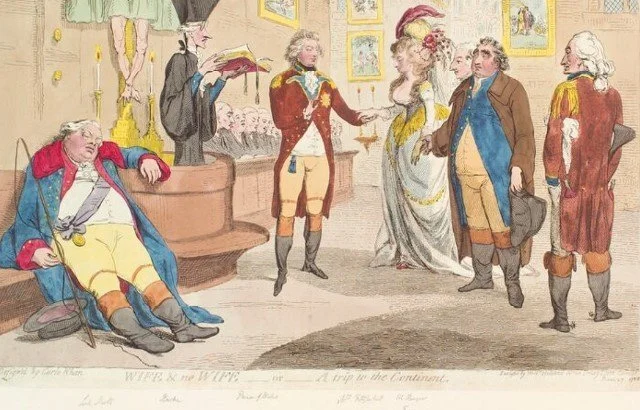
You pass a turning on your right into Weltje Road. Louis Weltje was a German cook of obscure origin who became clerk of the kitchen of the Prince Regent in Brighton. He ran a club by 1782 in St James and owned a pastry shop and restaurant in Pall Mall. On his retirement he bought a large house in Hammersmith, passing away there in 1810. He was commemorated in a street name. The cartoon below by James Gillray is in the collection of the National Portrait Gallery. It shows Weltje (second from right in brown coat) at the court of the dissolute Prince Regent (far left).
LONDON CORINITHIAN SAILING CLUB
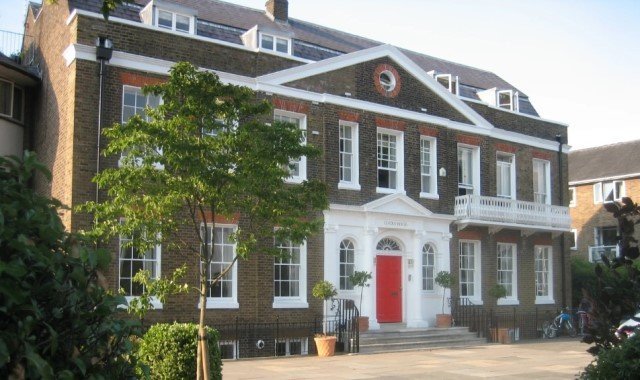
Next up on your right are the grand premises of the London Corinthian Sailing Club at Linden House (below).
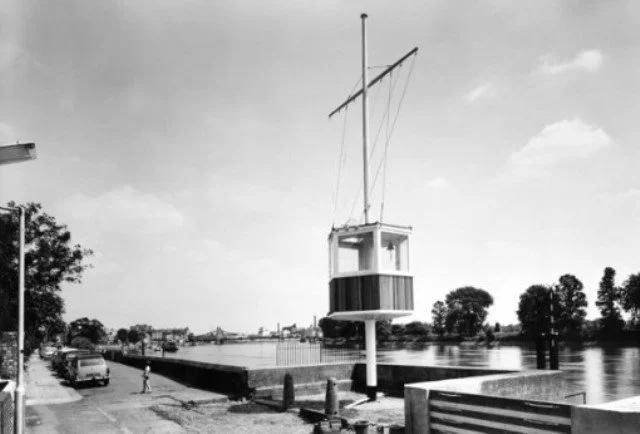
The race box won a Civic Trust award in 1964.
-
Description text goes here
THE OLD SHIP PUB
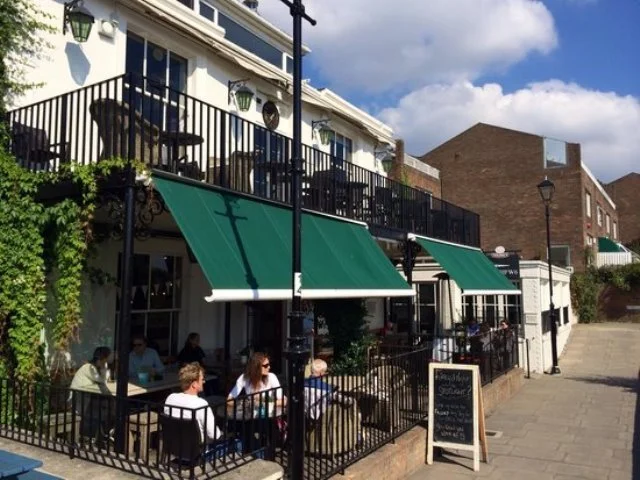
After the London Corinthian Sailing Club, keep walking along the ege of the river, under an overhanging apartment building, and you come to the Old Ship pub on your right, which sits beside a small riverside park. The pub dates from the early 17th century and was saved from demolition during the building of the West Middlesex Water Works because it had an important landing stage on its river frontage. It remained sandwiched between the noise and pollution of heavy industry and the river for over a century - until in the 1960s the walkway along the Thames was created.
THE ELDER PRESS CAFE

At the end of the small park and playground beyond the Old Ship, turn to the right inland, and opposite the Black Lion pub you see the Elder Press cafe - your destination.
-
The Elder Press cafe was previously a builders’ merchants, W. Frogley & Sons Ltd, with a builder’s yard to the side. More recently it was a design studio before Lindsay Elder opened the cafe in 2019. She writes: ‘As local residents we love delving into the history of our neighbourhood and finding out more about some of the interesting people who lived and worked here. Just imagine a fantasy tea break at the Elder pess Cafe where William Morris and Eric Ravilious would chat over a flat white, and Mary Fedden could share a cinnamon bun with Emery Walker’.
The Elder Pess cafe is in our view a triumph of interior and graphic design, thanks to the ambitions of its founder and owner Lindsay Elder. The interior design was by Kate Guinness Design, and the branding and graphic design were by Starch Green, the studio of the artist designers, Kate Fishenden and Jonathan Mercer. They are shown in the photo below.
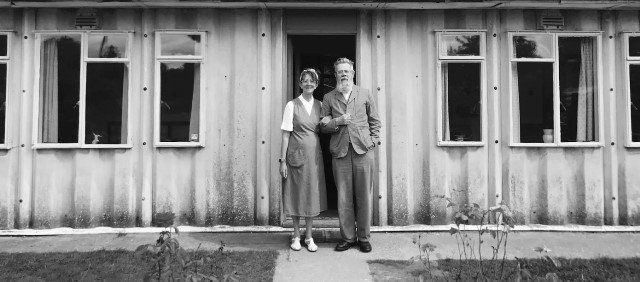
Artist designers Kate Fishenden and Jonathan Mercer undertook the branding and graphic design for the Elder Press Cafe.
AN ARTISTIC COMMUNITY
The Elder Press publishes a delightful map of the area (avaiblable for sale at the cafe) explaining its artistic heritage. The following is extracted, with acknowledgement and thanks, from the map’s commentary:
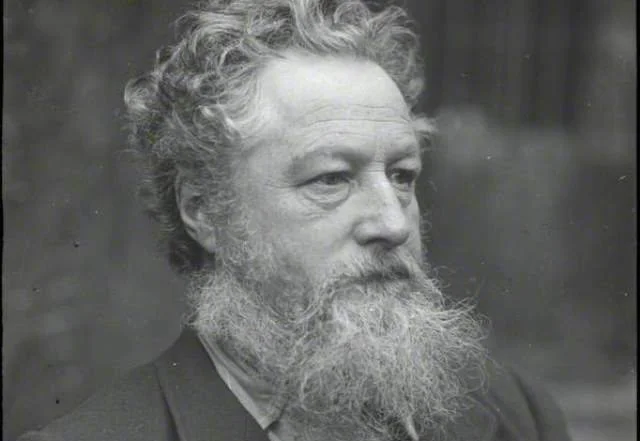
Emery Walker, founder of the Doves Press.
The Doves Press was established by Thomas Cobden-Sanderson and Emery Walker (above) in 1900, funded by Annie Cobden-Sanderson, suffragette, socialist and Thomas’s wife. Cobden-Sanderson ran a bindery, worked with Walker and Morris and believed there was an opportunity to create 'the book beautiful’ after Morris’s Kelmscott Press closed in 1898. Originally established at 1 Hammersmith Terrace, the press moved to Cobden-Sanderson’s bindery in Doves passage. Their Doves Type was based on the fifteenth century type of Nichoas Jensen - echoing an earlier pre-industrial age. Unfortunately their relationship took a turn for the worse, and Cobden-Sanderson decided to destroy the metal type by throwing it over Hammersmith Bridge, which took an estimated 170 trips. Miraculously some pieces of the type have been found in the mud of the river bed! A digital reconstruction of the Doves typeface has been created by Robert Green (see above).

Hammersmith Terrace, built in the 1770s by an entrepreneurial developer, Peter Calmel, must have been an oddly urban addition to a largely rural area populated by market gardens and orchards.
-
The terrace has been, and still is, home to many notable residents. A.P.Herbert, author and MP, lived at No.12. His most famous book, The Water Gypsies, written in 1930, is described here. The basement of No.10 was home to Gertrude Hermes, until it got flooded. She designed a swallow door knocker for A.P.Herbert. May Morris, embroiderer and director of Morris & Co, lved at No.8. Her marriage was somewhat damaged by George Bernard Shaw staying at No.7 for several months. No.7 was occupied by T.J.Cobden-Sanderson before Emery Walker moved in, now home to the Emery Walker Trust and open on certain days for tours. Walker was the ‘back room boy’ of the Arts & Crafts movement, working alongside William Morris, and a significant participant in the socialist movement in Hammersmith. Edward Johnston, calligrpaher and type designer, occupied No.3. He taught Eric Gill at Central School of Arts & Crafts. No.1a ws a shop with the Bell family operating the river ferry from the back at Bell Steps.
Edward Johnston with quill pen is show below, with below that the remarkably modern typeface he designed for London Underground in 1913.
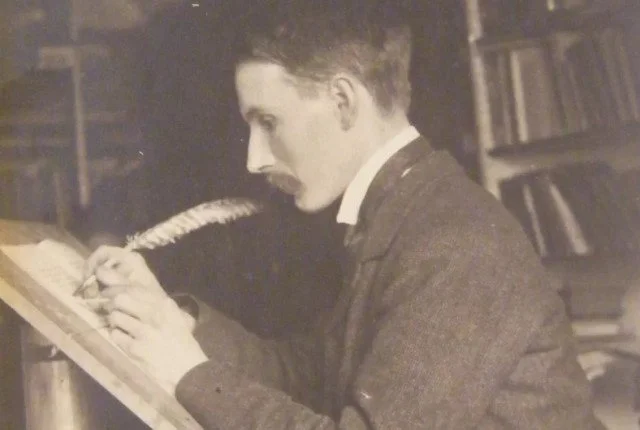
Edward Johnston: master of traditional and moder typeface design.
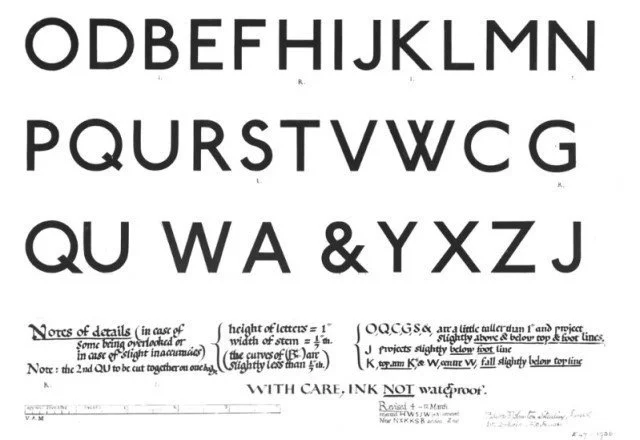
Edward Johnston’s typeface for London Transport, designed in 1913.
In 1905 Edward Johnston and Eric Gill, two of the most influential people inmodern typography, moved to the Arts & Crafts community in Hammersmith.
-
Johnston’s calligraphic titling added beautiful elements to the Doves Press books and he developed the original London Transport font in 1913. Gill, sculptor, wood engraver and typographer, lived close by at 20 Black Lion Road (demolished to build the Great West Road) and worked closely with Johnston. His typeface, Gill Sans, strongly echoes Johnston’s London Transport font. Gill was also a printer, moving his press to Ditchling in 1907.
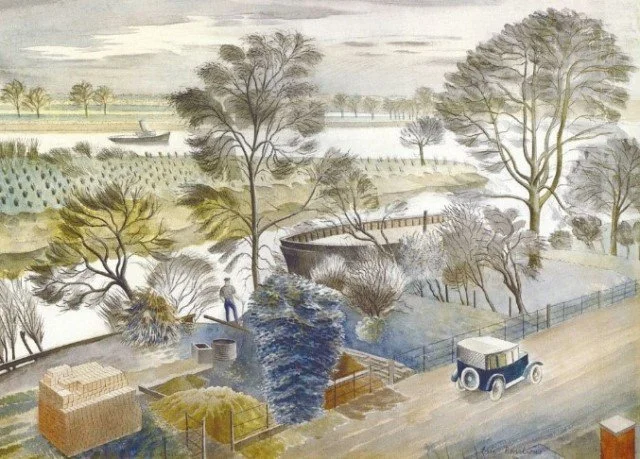
Hammersmith riverside by Eric Ravilious.
Between 1931 and 1935 Eric and Tirzah Ravilious lived on the corner of Weltje Road - his watercolour of Chiswick Eyot (above) is from 1933. Phoebe and Harold Stabler, cermicist and silversmith, lived at number 34. Rivercourt House, built in 1808, was occupied from 1923 to 1939 by the writer and socialist Naoimi Michison (below), a woman of enormous energy. She lived to 101 and was famous for her parties with friends such as E.M.Forster and Aldous Huxley.